

What Will You Read in This Blog?
- Introduction to the Incident: A quick overview of the Faridabad bust and its timing amid a shocking Delhi explosion.
- Details of the Operation: Step-by-step breakdown of the joint police raid, arrests, and seized materials.
- The Human Element: Radicalized Professionals: Insights into the “white-collar terror ecosystem” involving doctors and students.
- Broader Connections and Threats: Links to Jaish-e-Mohammed, potential targets, and festive season risks.
- Security Response and Future Implications: How authorities are responding and what it means for national vigilance.
- Conclusion: Lessons for a Safer India: Key takeaways and calls to awareness.
Introduction to the Incident
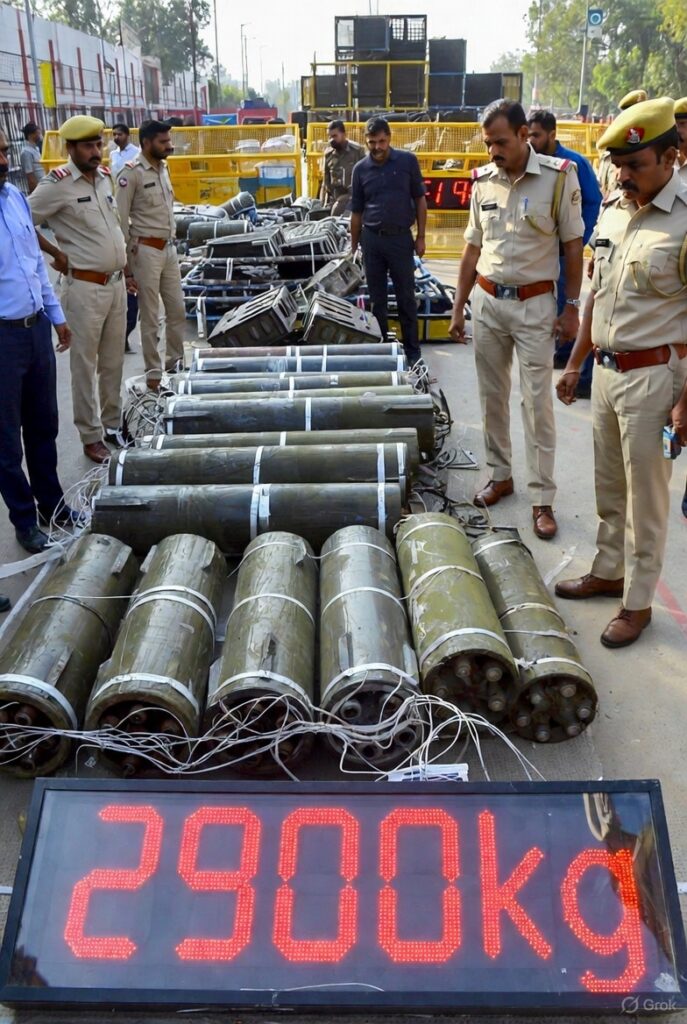
The day began with routine vigilance but escalated into a high-stakes operation. At around midday, a joint team from Jammu & Kashmir (J&K) Police, Haryana Police, and the Intelligence Bureau (IB) raided a nondescript residence in Faridabad’s Ballabhgarh area. What they found was staggering: over 360 kilograms of ammonium nitrate a key ingredient in improvised explosive devices (IEDs) along with arms, ammunition, and bomb-making timers. This initial haul ballooned to a total of 2,900 kilograms when additional stashes were traced across linked properties in Uttar Pradesh and Kashmir, including 2,563 kilograms of suspected explosives from Saharanpur.Tragically, the bust’s shadow loomed large as news broke of the Red Fort explosion later that evening. Eight people perished, and several were injured in what authorities are probing as a possible standalone incident or spillover from disrupted networks. While no direct link has been confirmed, the timing has heightened alerts across Delhi-NCR, especially during the festive Diwali season when crowds swell at landmarks.
Details of the Operation
The raid wasn’t a stroke of luck but the culmination of months-long surveillance. Acting on IB inputs about suspicious posters glorifying terrorists in Kashmir, J&K Police zeroed in on a network spanning states. The primary target: a rented accommodation in Faridabad housing a Kashmiri doctor, who was arrested on-site along with two associates.Seizures included:
- Explosives: 360kg ammonium nitrate and 2,900kg total materials, enough for multiple high-impact devices.
- Weapons: An AK-47 rifle, pistols, and over 20 electronic timers for remote detonation.
- Other Items: Radicalization propaganda, forged documents, and communication devices linking to handlers abroad.
Eight arrests followed, including three doctors from Kashmir radicalized via online channels. Interrogations revealed plans for synchronized attacks on soft targets like markets and transport hubs in Delhi. Social media buzz, including real-time updates from eyewitnesses, amplified the operation’s urgency, with posts detailing the dramatic raid unfolding.
The Human Element: Radicalized Professionals
What makes this plot particularly insidious is its “white-collar” facade. The arrested doctors qualified professionals from Srinagar allegedly used their credentials to procure chemicals under the guise of medical supplies. One suspect, wanted for pasting pro-terror posters in J&K, had evaded capture until this bust./head
Broader Connections and Threats
The fingerprints of Jaish-e-Mohammed (JeM), a UN-designated Pakistan-based group led by Masood Azhar, are evident. Handlers in PoK reportedly supplied blueprints for IEDs, aiming to disrupt India’s festive peace and stoke communal tensions. Ties to Ansar Ghazwatul Hind and Al-Qaeda affiliates suggest a transnational web, exploiting porous borders and digital shadows.The Red Fort blast, occurring mere hours post-raid, underscores the plot’s scale. Preliminary forensics point to ammonium nitrate residue, mirroring the seized materials, though officials urge caution against speculation. With Diwali markets teeming, the averted threat could have multiplied the tragedy exponentially.
Security Response and Future Implications
Delhi Police and NCR forces have ramped up patrols, deploying drone surveillance and AI-driven threat analytics at key sites. J&K’s Special Operations Group (SOG) leads the probe, with NIA involvement likely for interstate angles. Public advisories emphasize reporting suspicious activities via helplines like 112.Long-term, this bust signals the need for enhanced radicalization monitoring in academia and healthcare. Investments in cyber-intel and community outreach could stem the tide, as echoed by security analysts. Yet, it also exposes gaps: delayed chemical regulations and online echo chambers that amplify hate.Conclusion: Lessons for a Safer IndiaThe Faridabad foiling is a testament to India’s resilient security apparatus—ordinary officers thwarting extraordinary evil. As we mourn the Red Fort victims and celebrate Diwali’s light, let’s commit to vigilance: question unchecked narratives, support ethical intel, and foster unity. In an era of hybrid threats, awareness is our strongest shield.What are your thoughts on combating “white-collar” terror? Share in the comments below. For verified updates, follow official channels like @JmuKashmirPolice.
Investigators describe a sophisticated ecosystem: students and professionals groomed through encrypted apps, funded by hawala networks, and directed by overseas operatives. This shift from traditional militants to educated radicals poses new challenges—how do you spot extremism in boardrooms or clinics? Experts note a rise in such cases, with similar modules busted in Kerala and Maharashtra earlier this year.